Agile vs. Scrum vs. Kanban: Choosing the Right PMS Framework for Your Team
Demystify Agile, Scrum, and Kanban methodologies. Learn how to map these project management frameworks to your PMS software dashboards.
 Marcus Vance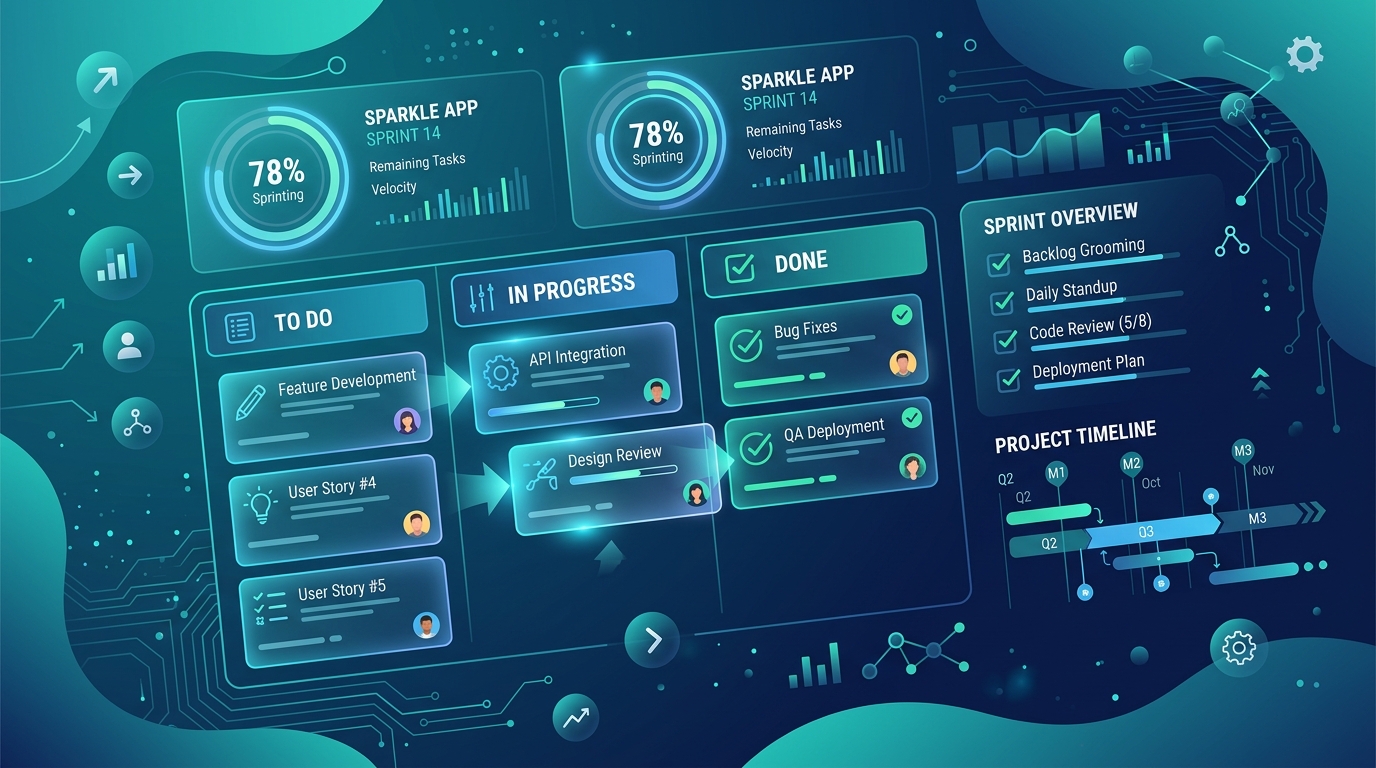
Selecting a project management framework is one of the most critical decisions a team makes. The chosen framework dictates how tasks are assigned, progress is monitored, and software releases are planned. In this guide, we evaluate Agile, Scrum, and Kanban, detailing how to implement them inside your project management system (PMS).
1. The Agile Paradigm: Core Values and Principles
Agile is not a specific set of rules; it is a philosophy outlined in the Agile Manifesto. It prioritizes individuals and interactions over processes, working software over comprehensive documentation, customer collaboration over contract negotiation, and responding to change over following a static plan.
All specific project management methodologies—including Scrum and Kanban—are practical implementations of these core Agile values. The goal is to build iterative feedback loops, allowing teams to adjust direction based on real stakeholder feedback.
2. Scrum: Structured Iterations and Velocity
Scrum is a highly structured framework built around fixed-duration cycles called sprints (typically two to four weeks). Scrum introduces specific roles and ceremonies:
- Product Owner: Manages the product backlog and defines feature priorities.
- Scrum Master: Removes delivery roadblocks and coaches the team on Scrum practices.
- Development Team: Cross-functional engineers who commit to and build sprint deliverables.
- Daily Standup: A quick, 15-minute synchronization meeting to discuss daily progress and blockages.
Inside a PMS, Scrum is mapped using dedicated sprint backlogs, burndown charts, and story point velocity indicators. Once a sprint begins, the scope is locked, protecting developers from interruptions and scope creep.
3. Kanban: Continuous Flow and Work in Progress Limits
Kanban is a visual framework focused on continuous delivery and workload balance. Unlike Scrum, Kanban does not use fixed-time sprints or role assignments. Instead, work flows continuously from backlog to completion.
The core principle of Kanban is setting Work in Progress (WIP) limits. WIP limits restrict the number of active tasks allowed in any given stage (e.g., no more than 3 tasks in the "Review" column). This instantly highlights bottlenecks and prevents developers from starting too many tasks without finishing existing ones.
4. Which Framework is Right for Your Team?
Choose your framework based on your project requirements and team dynamics:
- Use Scrum if: You are building a complex product that requires predictable, iterative releases with structured feedback loops and locked short-term goals.
- Use Kanban if: Your team manages operational tasks, bug fixes, or continuous support tickets where priorities shift hourly and work flows continuously.
- Use Hybrid (Scrumban) if: You want the structured sprint cycles of Scrum but require the visual flexibility and WIP limits of Kanban.
Summary
Whether you choose the structured sprint cycles of Scrum or the continuous flow of Kanban, consistency is key. Ensure your team maintains updated card boards in your PMS, logs impediments immediately, and leverages retrospective reviews to refine operations.
Marcus Vance
Agile Coach & Scrum Master
Marcus helps cross-functional software teams implement Scrum and Agile frameworks. He specializes in sprint planning, backlog grooming, and velocity optimization.
Ready to streamline your business?
Connect your HRMS and Project Management workflows today. Increase your team efficiency and automate routine compliance tasks.