Agile Project Management: The Ultimate Guide to Sprint Planning
Master sprint tracking, milestone mapping, and workload balancing with our complete guide to agile project management systems.
 Marcus Vance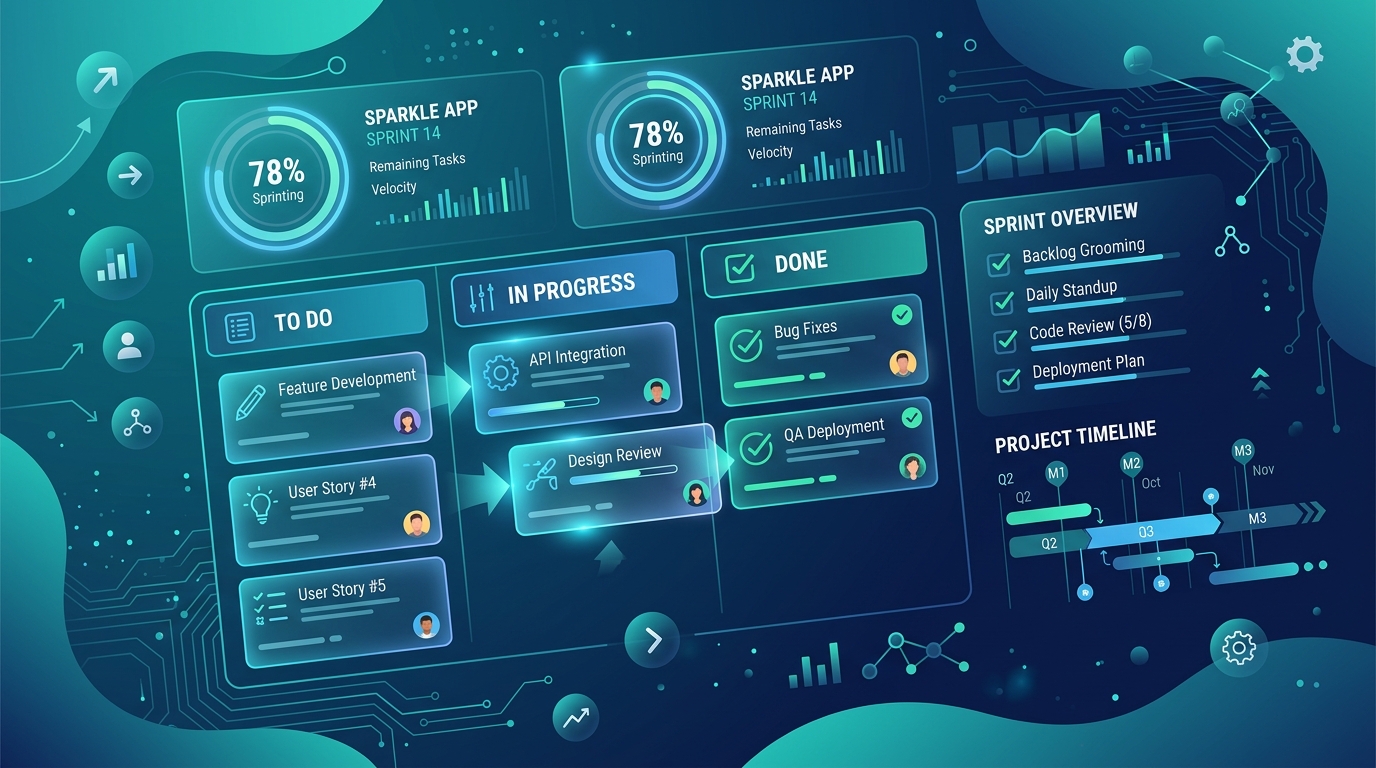
In modern software engineering, deliverability depends heavily on how tasks are structured, estimated, and executed. Agile Project Management offers a flexible framework that empowers teams to deliver incremental value iteratively. The heartbeat of this framework is the sprint planning session.
1. The Anatomy of a Successful Sprint
A sprint is a time-boxed iteration (usually two to four weeks) during which a team works to complete a set amount of work. Successful sprints don't happen by accident; they require thorough backlog grooming and alignment on the sprint goal. A PMS software tool should visually reflect these columns—To Do, In Progress, and Done—to maintain transparent progress tracking.
2. Step-by-Step Sprint Planning Blueprint
Follow these steps during your next planning meeting to align the team and guarantee delivery:
- Establish the Sprint Goal: A high-level description of what the team intends to achieve during the sprint.
- Review the Product Backlog: The Product Owner presents the highest-priority user stories.
- Determine Team Capacity: Take holidays, leave, and operational work into account to know your real bandwidth.
- Select Items and Map Subtasks: Developers pull stories into the sprint and break them into specific tasks.
3. Measuring Sprint Velocity and Continuous Improvement
A critical benefit of using a Project Management System (PMS) is the ability to track velocity—the number of story points completed per sprint. Use burndown charts to monitor daily progress, identify bottlenecks early, and discuss improvements during the Sprint Retrospective. Over time, velocity becomes predictable, making roadmap commitments highly accurate.
Conclusion
By implementing a structured approach to sprint planning and pairing it with a visual sprint tracker, you remove ambiguity and enable developers to focus entirely on coding and delivery.
Marcus Vance
Agile Coach & Scrum Master
Marcus helps cross-functional software teams implement Scrum and Agile frameworks. He specializes in sprint planning, backlog grooming, and velocity optimization.
Ready to streamline your business?
Connect your HRMS and Project Management workflows today. Increase your team efficiency and automate routine compliance tasks.